
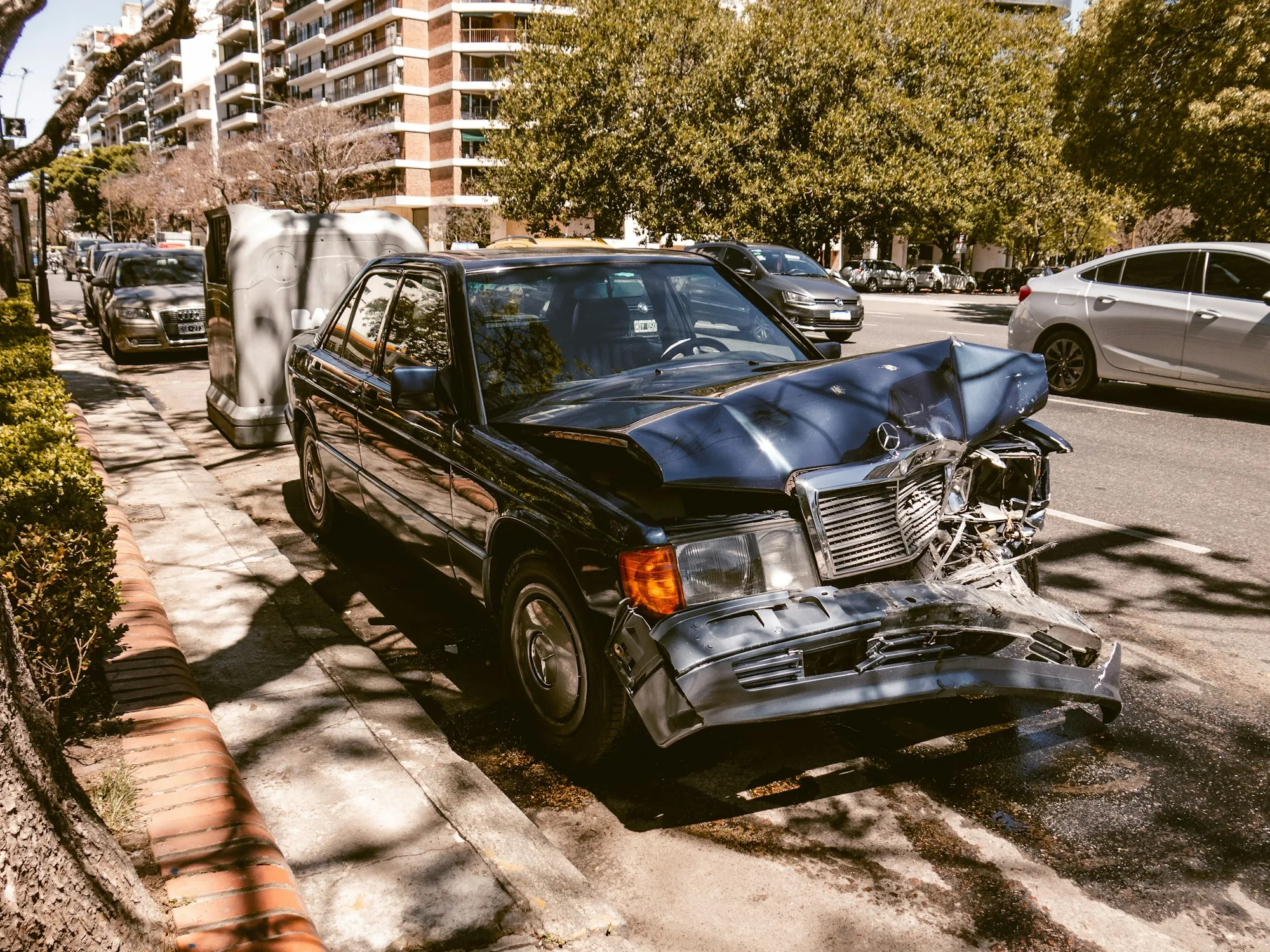
Post-crash repair
Collision Repair in Lucas With the Factory Finish in Mind
A crash on FM 1378 or a slow bump in a parking lot over in Allen can look better or worse than it really is. We sort out which, then plan a repair that does what the car needs and nothing it doesn't.
Walk us through the crash: (000) 000-0000A Measured Approach to Accident Damage
Every collision leaves two kinds of damage: the obvious kind on the surface and the quieter kind behind it. Our approach in Lucas is to find both before deciding anything, because a good plan protects more of the car than a hurried one. Structure that shifted gets measured and corrected, since nothing on the outside lines up until the foundation does. Outer panels are judged one at a time, and if a fender can be straightened rather than swapped, that is usually where we begin. Paint goes only where the repair requires it, then gets blended so the new color settles quietly into the original. What we aim for is a car that looks untouched to anyone who never heard about the crash.
Pieces of a Careful Collision Repair
Each car takes a slightly different path. Most accident repairs here draw on some combination of the following.
Layer-by-layer inspection
Bumper covers, absorbers and brackets come off so we can see how far the impact traveled before anyone writes a final plan.
Body dimensions checked against factory data
The structure is compared to the manufacturer's published measurements, which tells us whether it moved and in which direction.
Corrections drawn on a bench
Shifted rails and aprons are pulled back into position in controlled stages, with fresh readings taken between each pull.
Mend-or-replace decisions, panel by panel
We repair panels when the metal and the procedures allow it, and replace them when straightening would compromise strength or fit.
Mechanical parts near the impact
Radiators, wheels, steering links and suspension pieces around the damage are looked over and repaired if the crash reached them.
Paint confined to the repair zone
New color goes on repaired or replaced panels, with a gradual blend into neighbors so the transition cannot be picked out.
Electronic health scans
Diagnostic software is run once before disassembly and again at the end, so crash-related fault codes are found and then confirmed gone.
A walkaround at handover
Before you take the keys, we look at gaps, lighting, doors and finish together in good light.
How Your Collision Repair Unfolds
- 01
Survey the damage
We start with photos and a close look at every panel the impact touched, including the ones that merely look scuffed. A written estimate follows, listing what we plan to repair, what must be replaced and the reasoning behind each. Should insurance be paying, the adjuster gets the very documentation you see. Nobody has to guess at the scope.
- 02
Open it up and confirm
With approval in hand, the technician disassembles the damaged section. Anything concealed behind trim and bumper covers gets photographed and forwarded for approval before anyone repairs it. We keep you posted whenever the plan or the timeline shifts. Nothing is added to the job without a conversation first.
- 03
Rebuild, refinish, return
The order matters: structure, then panels, then paint and blending. Reassembly follows, along with a closing diagnostic scan and a road test on the country roads around Lucas. At pickup, we go over the car side by side with you and point out which parts were mended, which are new and which never needed touching.
Reasons Our Collision Plans Hold Up
Original parts kept when sound
A panel that can be repaired properly keeps its factory corrosion protection and its original fit. We replace parts when the procedures or the damage call for it, not out of habit.
Geometry ahead of gloss
Glossy paint on a shifted body still drives wrong and wears tires unevenly. Measuring first keeps the outside honest.
Paint nobody notices
Blending carries new color gradually into the adjoining panels. In daylight, the repaired area should read as one continuous finish.
Talk Over the Accident Before You Decide
A short conversation about which corners took the hit and how the car feels on the road is a sensible first step. We will explain what can likely be saved and what probably cannot.
Describe the damage to the shop at (000) 000-0000