
Color, blend and clear
Auto Painting & Refinishing in Lucas, Blended to Disappear
Paint is the last resort in a preservation-minded repair, so when it is needed, it has to be right. Prep, matching and blending decide whether anyone ever notices.
Talk paint and color at (000) 000-0000Paint Only Where It Earns Its Place
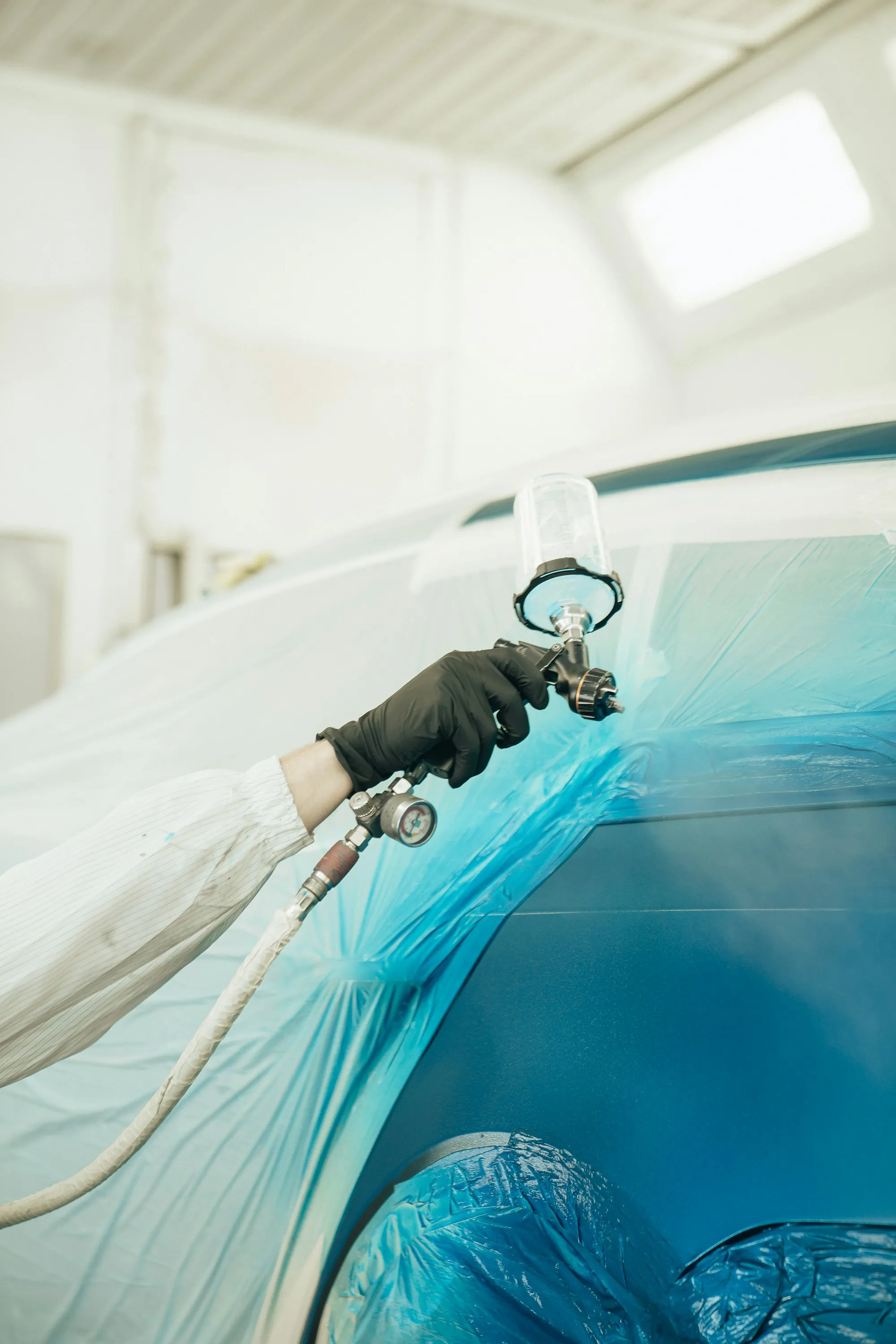
The best refinish is one nobody can find, and the second best is one that was never needed. At our Lucas shop, paint enters the plan only after we have ruled out paintless repair or polishing for the area in question. When a panel does need color, we read the paint code, then spray sample panels and hold them beside your car outdoors, because factory colors vary slightly from batch to batch. New color is applied to the repaired area and gradually faded into neighboring panels so the eye has no hard edge to catch. Clear coat goes over the entire blend zone for consistent gloss. Cars that sit in the sun and log miles along FM 3286 or out toward St. Paul get extra attention, since their paint has aged away from the original formula.
Inside a Careful Refinish
Most of a lasting paint job happens before the spray gun is picked up. The items below decide how the finish looks years from now.
Paint-code research and variants
We pull the factory code and check its known variants so the formula starts as close to your car as possible.
Sample panels sprayed and compared
Sample cards are sprayed and compared to the car outdoors, then adjusted until shade, flop and metallic sit correctly.
Surface prep done patiently
Sanding, cleaning and masking take most of the time, and they are what keep the new finish from peeling or showing edges.
Primer and sealer layers
Bare or repaired areas get the right primer and sealer so color lays down evenly and adheres for the long run.
Tapering color past the seam
Color is faded into the next panel rather than stopping at a joint, which hides any small difference in shade.
Booth spraying and proper cure
Base and clear are sprayed in a dust-controlled booth and cured fully before anyone handles the surface.
Texture brought in line
Light color sanding and polishing bring the new clear's texture in line with the original finish around it.
Tricoats and pearls
Multi-stage colors need extra test panels and careful layering, and we plan for that from the start.
From Bare Repair to Blended Finish
- 01
Dial in the shade
Once the bodywork is done, the paint code is looked up and a first batch is mixed. Sample panels are sprayed and set beside the car outdoors. The formula is tinted until it matches the panels that will stay original. Getting this right usually outlasts the time spent in the booth.
- 02
Mask, prime and apply
Sanding, degreasing and masking come first, so overspray cannot reach other panels. Primer and sealer go down first, followed by base color across the repair and a fade into the adjoining panel. Clear coat covers the blended zone for even gloss.
- 03
Bake, level and look again
The finish is cured, then lightly refined so its texture matches the factory paint around it. We inspect the panels from different angles and in sunlight. Tape edges, masking residue and any dust are cleaned up before handover.
Why Our Refinishes Blend In
Restraint comes first
We paint the smallest area that will produce an invisible result. Less new paint means less that can ever drift from the original.
Matching is done outdoors
Shop lights can flatter a mismatch. Comparing color in daylight is how we catch differences before they become permanent.
Prep is never rushed
Most paint failures trace back to preparation. Taking that stage seriously is what keeps a refinish looking right for years.
Wondering How Much of the Car Needs Paint?
Often the answer is less than you might think. Give us the basics and we'll point out where paint is truly needed and where it can be avoided.
Ask about refinishing at (000) 000-0000